Cultural Traditions
The Baijiu Ceremony
We are calling our commitment ceremony “baijiu”. Depending on how the characters are written, this transliteration can refer to two things: 白酒, a distilled liquor common in China; or, in our case, 摆酒, which literally means “laying/pouring out the wine for celebration”. Together, we pour wine and toast to our union as well as to Elina’s new decennary.
A “tea ceremony” is traditionally part of a matrimonial formality, serving as a symbol of respect and gratitude to the couple’s parents, soon-to-be in-laws, and extended family members. By pouring tea for each other’s parents, the couple shows their appreciation for the sacrifices the older generation had made for them. In our case, we have a “wine ceremony”, hence the “baijiu” term, where we’d pour wine at our ceremony for our elders as a token of appreciation for the support and love that they have generously given us.
The Date and Time
The starting time of our ceremony is 17:20 or 5:20 PM. 520 (wu er ling or 五二零) is a modern term that’s homophonic to “wo ai ni” (我爱你, I love you). (Fun fact: 5/20 is also considered an unofficial Valentine’s Day by many young people in China.) Additionally, Peter and Elina’s baby bunnies were born on 5/20 in 2021, similar to our late dog Vilja.
Ceremonial Outfits
Peter and Elina’s ceremonial outfits: Traditionally, the Chinese ceremonial colors are red and gold, which symbolize happiness, success, and love. Elina’s dress also has cranes and phoenix, which are epitomes of virtue, dignity and faithfulness, and are traditionally emblems of eternal unions.
The Double Happiness Symbol
At the ceremony there will be ample “囍” signs, aka “shuang xi” or “double happiness”, literally the symbol for happiness written twice. This is a common symbol in traditional Chinese ceremonies that serves as decoration, and is omnipresent in many other contexts as well, such as on china. We have the symbol on our rings as well ;)
Chinese Lions
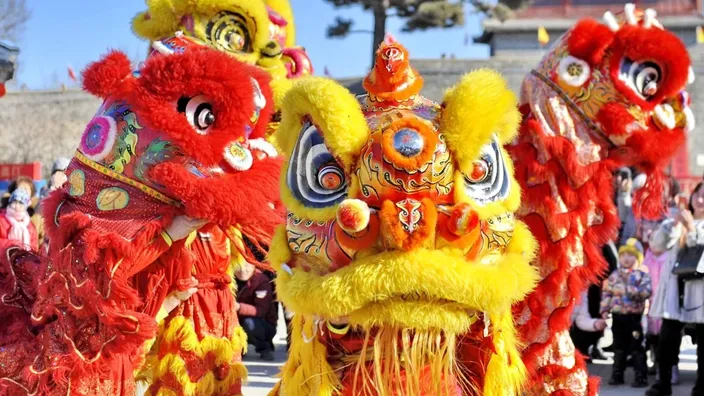
Chinese lion dance (舞狮) is a spectacle usually associated with the lunar new year, where people dress up as lions and dragons, as they’d bring happiness and success to the people while driving off evil spirits. These days, the lion dance can also be observed in ceremonies as a part of the process. Instead of lion dances, we incorporate the lions in some of our outfit and decorations.